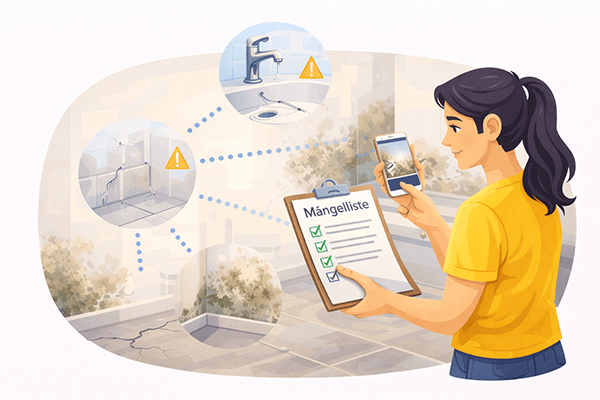
Moving – Defects in the Rental Property: Identify, Report & Rights

Defects should be identified early, documented and reported to the landlord.

Defects in the Rental Property: How to Act When Moving

When moving in or during the tenancy, defects in the rental property may become apparent. These can include visible damage, technical faults or issues that limit the proper use of the apartment. It is important to identify such defects early and report them correctly.

You can find more helpful moving-related topics in our moving service overview.


What Counts as a Defect?

A defect exists if the actual condition of the apartment differs from what was agreed in the rental contract. Typical examples include:

  • Dampness or mold
  • Faulty heating or hot water systems
  • Leaking windows or doors
  • Electrical defects
  • Noise caused by structural issues

Not every minor cosmetic issue automatically qualifies as a defect.


Properly Documenting Defects

Careful documentation is essential. Record defects as accurately as possible:

  • Photos or videos with a date
  • Clear description of the issue
  • Time and date of discovery
  • Witnesses, if available

These records are important in case questions or disputes arise later.


Reporting Defects to the Landlord

Defects should be reported to the landlord without delay, preferably in writing. This ensures the landlord can take action and that you fulfill your obligations as a tenant.

If necessary, set a reasonable deadline for the defect to be fixed.


Rights and Obligations in Case of Defects

As a rule, landlords are required to remedy defects. In certain situations, a rent reduction may be justified if the usability of the apartment is significantly impaired.

Before reducing the rent, you should seek reliable information or professional advice to avoid legal risks.


Preventing Defects and Avoiding Disputes

Many disputes can be avoided through a careful apartment handover and a detailed handover protocol. Inspect the apartment thoroughly and document its condition in writing.

This creates clarity for both move-in and move-out.

Frequently Asked Questions About Defects in Rental Properties

A defect exists if the apartment does not meet the condition agreed in the rental contract or if its use is restricted, for example due to dampness, mold or a faulty heating system.

Defects should be reported immediately after they are discovered, ideally in writing, to avoid disadvantages later on.

Use photos or videos with dates, provide a clear description and note when the defect was discovered. Witnesses can also be helpful.

Under certain conditions, yes. The extent of a rent reduction depends on the type and severity of the defect and should be assessed carefully.

In general, the landlord is responsible, provided the defect was not caused by the tenant.
Note:
Our content is carefully researched and regularly updated. It provides general guidance on creditworthiness and apartment hunting and does not replace individual legal or financial advice.

The content on this page is protected by copyright.

More topics about Moving & Living